
Understanding GLP-1 vs. GIP Medications: What’s the Difference?
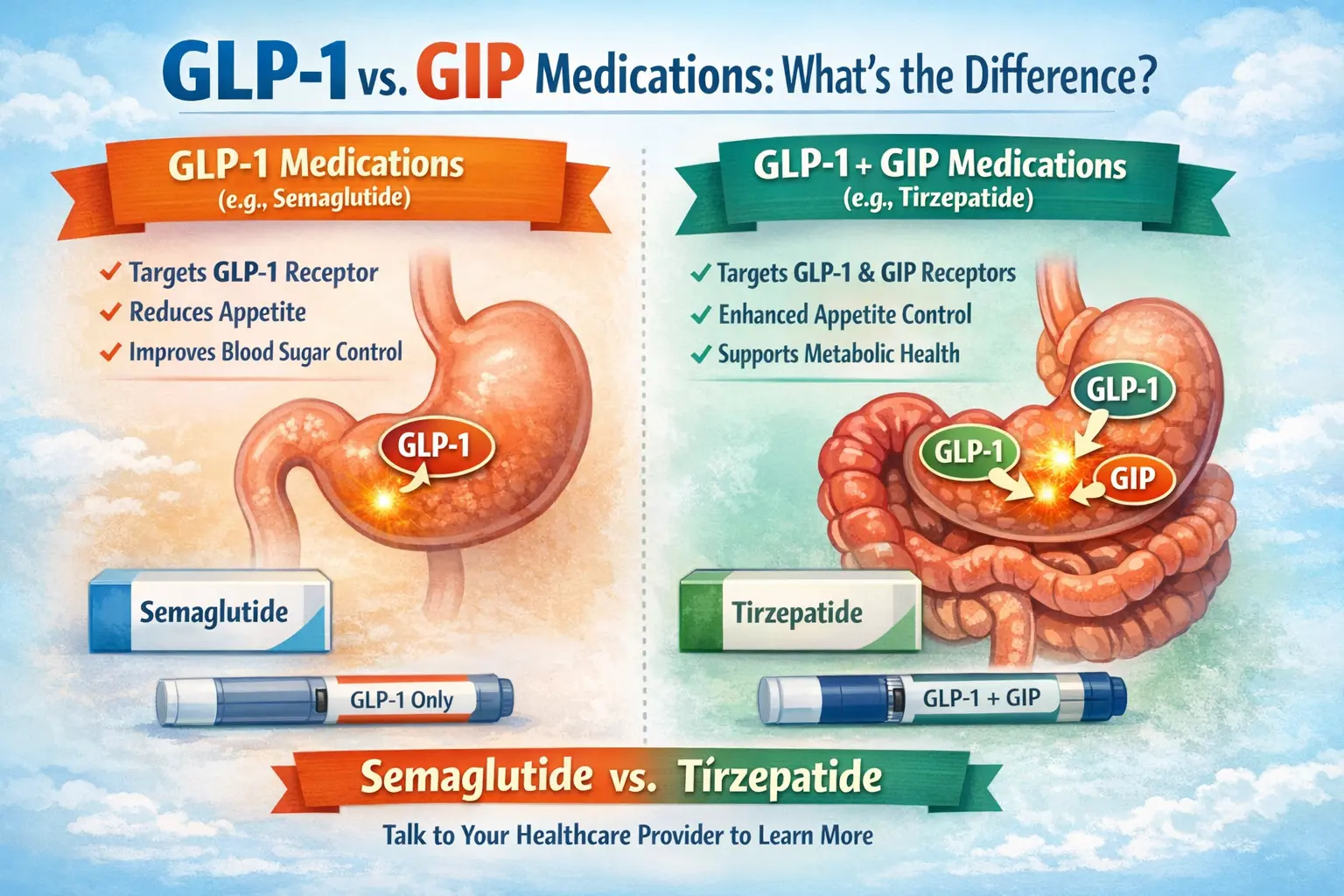
Medications that target GLP-1 and GIP hormones have become an exciting advancement in the treatment of weight management and metabolic health. These medications work with the body’s natural hormone systems to help regulate appetite, blood sugar, and metabolism. While the science behind them may sound complex, their purpose is simple: helping your body respond to food in a healthier and more balanced way.
What Are GLP-1 Medications?
GLP-1 stands for glucagon-like peptide-1, a hormone your body naturally releases after eating. This hormone helps signal to your brain that you’re full, slows how quickly food leaves your stomach, and stimulates insulin release when blood sugar rises.
Medications that mimic this hormone help enhance these natural signals, which can lead to reduced appetite, improved blood sugar control, and better portion awareness. One of the most well-known medications in this category is Semaglutide, hich is commonly prescribed for both type 2 diabetes and medical weight management.
By supporting the body’s natural fullness signals and stabilizing blood sugar levels, semaglutide can help patients feel satisfied with smaller amounts of food and experience more consistent energy throughout the day.
What Is GIP and How Is It Different?
GIP stands for glucose-dependent insulinotropic polypeptide, another hormone released in the gut when we eat. Like GLP-1, GIP helps regulate insulin and blood sugar levels, but it also appears to influence how the body uses and stores energy.
Newer medications are designed to activate both GLP-1 and GIP receptors at the same time, which may provide a stronger effect on appetite regulation and metabolic health.
One medication that works this way is Tirzepatide, which targets both hormone pathways. By activating these two systems simultaneously, tirzepatide may help support improved blood sugar control while also helping patients feel fuller for longer periods of time.
How Semaglutide and Tirzepatide Compare
Both semaglutide and tirzepatide are typically administered as once-weekly injections and are used as part of a broader treatment plan that includes lifestyle support and nutritional guidance.
The main difference lies in how they work in the body:
- Semaglutide: Targets the GLP-1 receptor only, enhancing the body’s natural fullness signals and slowing digestion.
- Tirzepatide: Activates both GLP-1 and GIP receptors, which may provide additional metabolic support and appetite regulation.
For some patients, one medication may be more appropriate than the other depending on their health history, treatment goals, and how their body responds to therapy.
Why This Matters for Patients
For many people, weight management is not simply about willpower. Hormones, metabolism, brain signaling, and blood sugar regulation all play significant roles in how the body processes food and stores energy.
Medications like semaglutide and tirzepatide help address these underlying biological systems, giving patients another tool to support long-term health. When combined with lifestyle changes, medical guidance, and ongoing support, these therapies can help patients make sustainable progress toward their health goals.
The Bottom Line
GLP-1 and GIP medications represent an important advancement in metabolic and weight management care. Semaglutide works by enhancing the body’s natural GLP-1 pathway, while tirzepatide activates both GLP-1 and GIP systems to support appetite control and metabolic balance.
If you’re interested in learning whether these treatments may be right for you, call us to schedule your evaluation at 864-236-1630, on our Contact Page here, or email us at info@test.ketaminesolutions.net